

 |
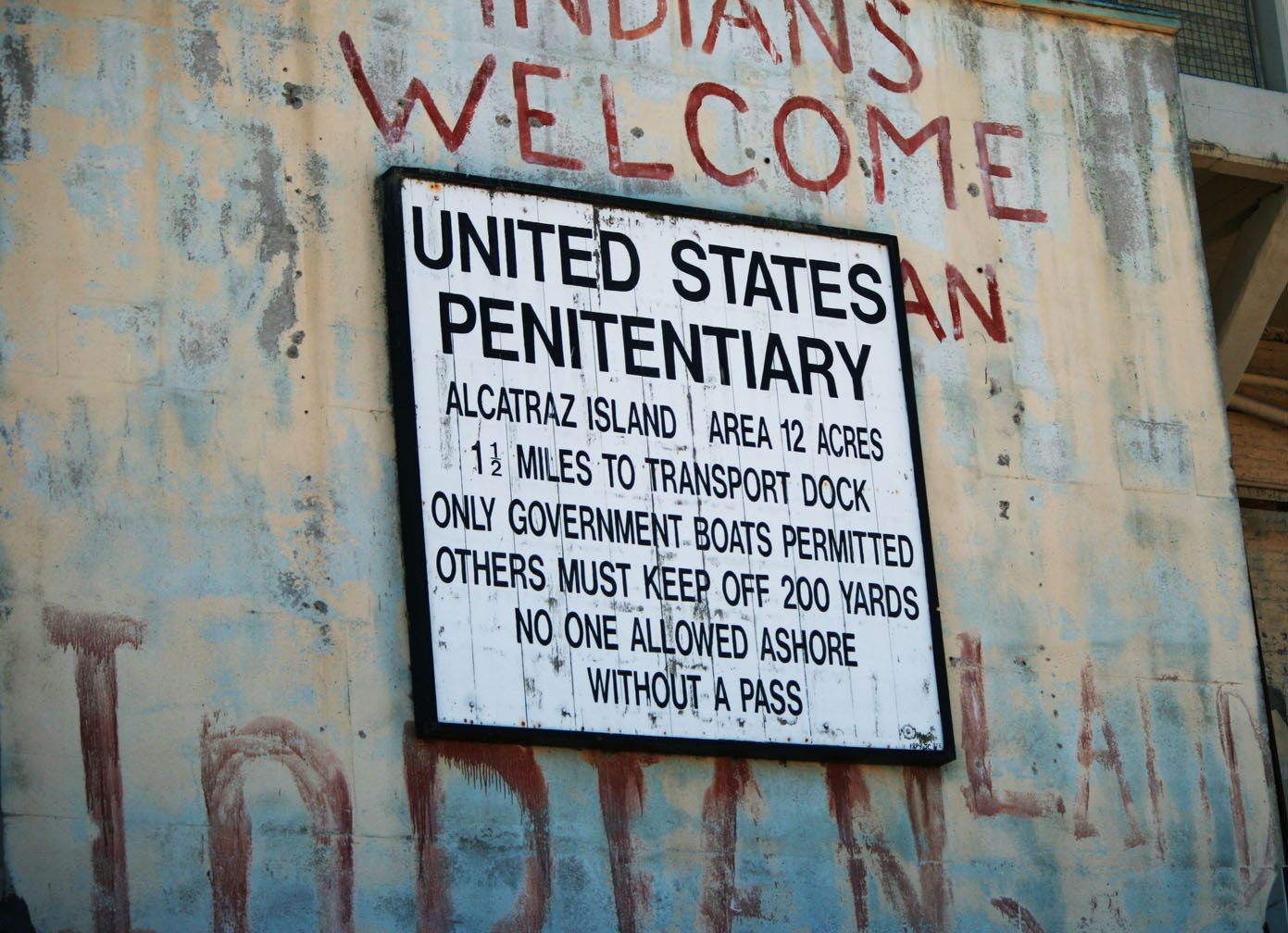
| Historic Alcatraz Penitentiary Island Sign- Fine Art Photograph by Michele at One December. On sale at etsy. |
Welcome to Week 11 of Human Rights Meditations. This week we're examining an Article from the United Nations Universal Declaration of Human Rights. Find out more about the series here. This series is much more about the time you devote to reflecting, and taking part in the discussion through comments below & twitter (hash tag #hrmlak) than it is about my own point of view, so do join in!
This week we're examining Article 11 of the UDHR.
Article 11: (1) Everyone charged with a criminal offence has the right to be presumed innocent until found guilty in accordance with the law in a public court proceeding in which they have received all necessary safeguards for their defence. (2) No one may be convicted of any criminal offence based on any act or failure to act which was not illegal under national or international law when it occurred. Nor shall any penalty harsher than the one that applied when the criminal offence took place be imposed.
Study the article below several times and allow it to settle in your mind (this is a substantial one, so you may wish to divide it up as you contemplate). Whilst you contemplate, keep these points in mind:
· What image popped into your head first?
· What was your reaction to the material?
· Think about how you view yourself when set against others.
· Think about the way you see those around you.
· Consider what you've learnt about world concerns.
Jot down the article and post it in a spot you'll notice regularly during the week. This will encourage you to maintain that reflection! Or, jot down something that caught your attention during this contemplation.
Time to start conversing! Let's discuss our views on each piece, what we're discovering about ourselves and the measures we're adopting to align better with the Declaration. Remember that you can also engage on twitter using this handle: #hrmlak
Let me start:
- Setting aside the formal court process for a moment, what springs to mind are the assessments we make daily, founded on people's appearances. We explored this in the conversation in Week 6 of this sequence. My work involves engaging with young people in the community, and I encounter the assessments levelled at them (solely because of their youth) constantly. I find this perhaps the most peculiar of all preconceptions/assessments because at some stage we've all been a "young person". My perspective has consistently been that we assess based on apprehension of what we don't understand, but this surely can't apply to assessing children/young people!
- Guantanamo Bay also comes to mind! One of the objections to this (and the entire US handling of "suspected terrorists") is that court procedures happened in private, and that the mechanism lacked openness (consequently information "emerges" periodically). I'm someone who deeply values the necessity of government openness. Responsibility is essential!
- Beyond the legislation we witnessed in the US & in Australia that came after 9:11 concerning the "powers" of the nation state to hold someone on suspicion of terrorism (drawing from reports from concerned citizens)- it appears that such legislation in numerous respects permits superficial and biased judgments to influence the legal system! I believe legislation of this nature tends to (even unintentionally) reinforce generalisations and legitimise bias.
Kate xx
PS: Cheers to Michele @ One December for backing this series and sharing her photo. You can view more of Michele's creations at her etsy shop.
PS: Cheers to Michele @ One December for backing this series and sharing her photo. You can view more of Michele's creations at her etsy shop.

